
European Union
What the EAA means for your Shopify store.
A short briefing on how the European Accessibility Act can apply when you sell to customers in the EU, and how AccessiWidget helps you work toward it. This is not legal advice.
How the Act can apply to a Shopify store
The European Accessibility Act is Directive (EU) 2019/882. Member States have written it into national law, so enforcement happens country by country. E-commerce services provided to consumers have been in scope since 28 June 2025.
A typical Shopify store, where a customer can browse, choose a product and check out, fits the directive's description of e-commerce services. The Netherlands Authority for Consumers and Markets (ACM) says the duty covers searching, choosing, logging in and paying, and that you remain responsible even if someone else built the site. A store outside the EU that sells to customers in EU countries can also be in scope. Whether yours is depends on how and where you sell.
Microenterprises that provide services are exempt: fewer than 10 people and annual turnover of no more than EUR 2 million, or a balance sheet total of no more than EUR 2 million. The "or" sits between turnover and the balance sheet, not between staff numbers and money. A five-person store with EUR 3 million in turnover is not a microenterprise under this definition.
The current harmonised reference is still EN 301 549 v3.2.1, built around WCAG 2.1 Level AA. EN 301 549 v4.1.1 adopts WCAG 2.2 and was published in September 2026, but as of 21 November 2026 it has not been cited in the Official Journal. ACM already recommends working to WCAG 2.2 so you are not redoing work later.
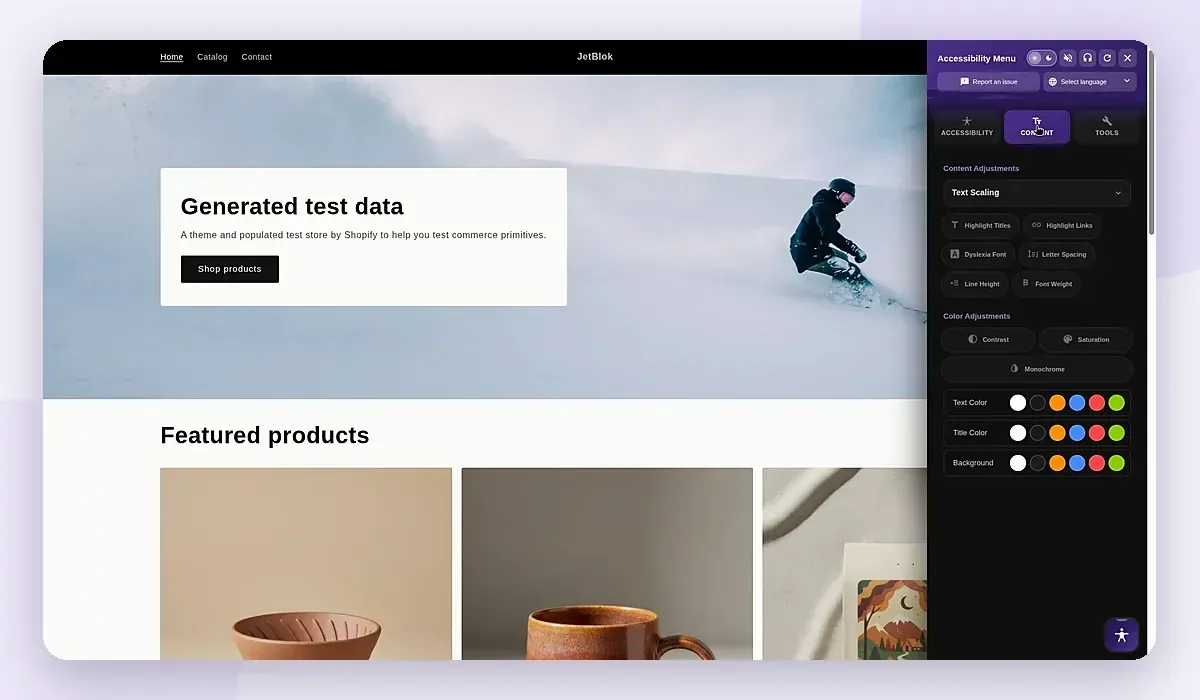
How AccessiWidget helps you work toward it
AccessiWidget gives shoppers tools to change how your store looks and reads, a store scan that flags common issues, and a way to publish an honest statement. That helps you work toward WCAG 2.2 and the EAA, and helps reduce accessibility barriers. It does not make a store meet the EAA, and it does not protect you from legal claims. A statement can support the duty to publish information about how the service meets the requirements. It is not a certificate.
A practical checklist
The in-app steps are explained in the setup guide.
- Write down where you sell, and whether the microenterprise definition could apply. Get legal advice if you need a firm answer.
- Install AccessiWidget and turn the widget on in your theme.
- Pick your widget colours and position so the button stays clear of chat widgets and cookie banners.
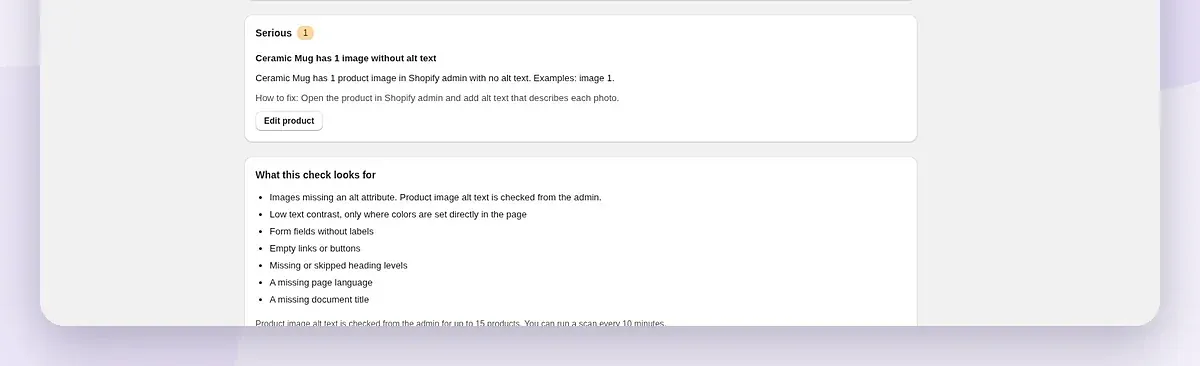
- Walk your own checkout with a keyboard, then run a store scan. Start with issues such as product images without alt text.
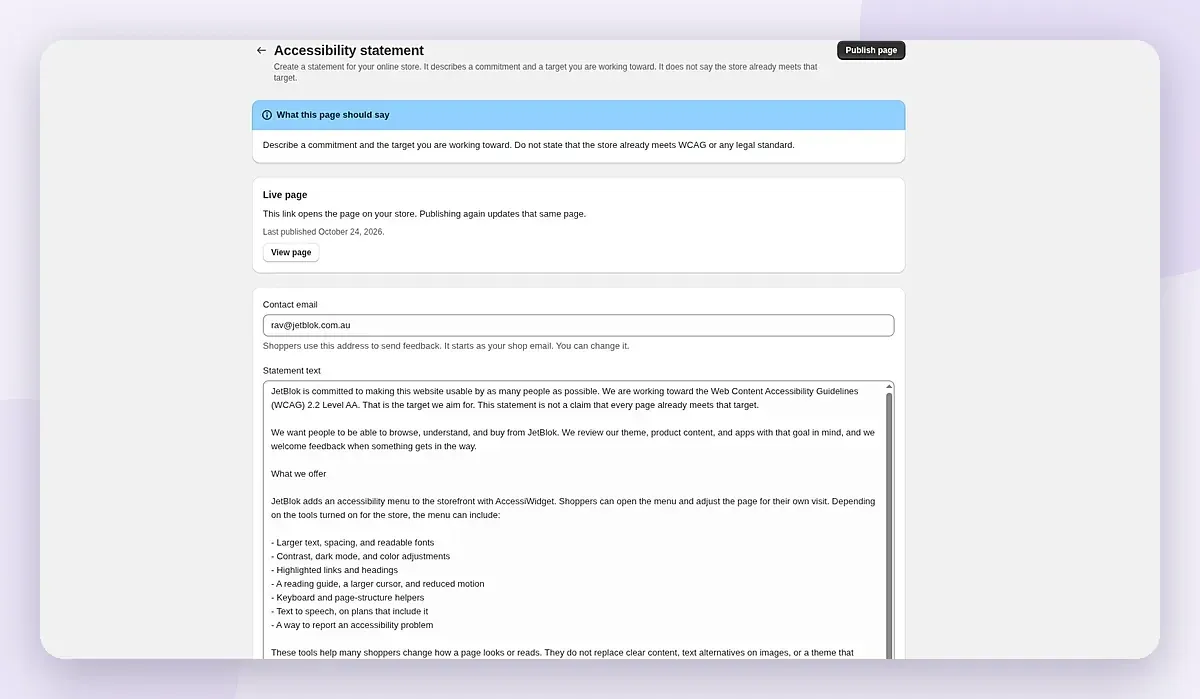
- Publish an honest accessibility statement. Describe the target you are working toward. Do not claim the store already meets a legal standard.
- Check shopper reports, follow them up, and re-check after theme edits, app installs and sales.
Read the full guide on JetBlok
This is general information, not legal advice. For a decision about your store, speak to a lawyer who knows the Member States you sell into.
Questions merchants ask
I send a handful of orders into the EU. Should I still pay attention?
It can be. The directive looks at whether you provide a service on the Union market, or make offers to consumers in the Union, not at how many orders you completed last month. Whether your store is in scope depends on how and where you sell. Get legal advice if you need a firm answer.
Should I wait until EN 301 549 v4.1.1 is cited before I change anything?
The version currently cited as the harmonised reference is still EN 301 549 v3.2.1, built around WCAG 2.1 Level AA. The newer version, which adopts WCAG 2.2, has not been cited in the Official Journal as of 21 November 2026. ACM already recommends working to WCAG 2.2 so you are not redoing work later.
Can an accessibility statement stand in for fixes to the theme?
No. Service providers have to publish information about how the service meets the requirements, and an honest statement can support that work. It is not a certificate, and it does not replace useful alt text, labelled forms, enough contrast, or a checkout that works with a keyboard.
Related guides: Australia , United Kingdom .