
United Kingdom
What the Equality Act means for a UK Shopify store.
A short briefing on reasonable adjustments under the Equality Act 2010, how that differs from the public sector rules, and how AccessiWidget can help. This is not legal advice.
How the Equality Act can apply to your store
If you sell online to customers in Great Britain, your website is one of the ways you provide a service. The Equality Act 2010 requires service providers in England, Scotland and Wales to make reasonable adjustments for disabled people. That duty can apply to the way you sell online, not just to a physical shop. Section 20 sets it out, including a duty to provide information in an accessible format where that is what the duty relates to.
The Equality and Human Rights Commission's Code of practice on services, Chapter 7 (published 5 August 2026) says the duty is anticipatory: you should think about disabled customers in advance, not wait for a complaint. What is reasonable depends on the facts, including the size and resources of the business.
The Act does not name WCAG, and it does not set a fixed technical score for private retailers. UK public sector sites are told to meet WCAG 2.2 Level AA and to publish a statement. That is a useful benchmark to work toward, not the same statutory duty on a private Shopify store.
This page focuses on the Equality Act, which covers England, Scotland and Wales. Northern Ireland has a different statute, the Disability Discrimination Act 1995. The European Accessibility Act is not UK domestic law, but it can still be relevant if you offer e-commerce services to consumers in the Union. See our EAA briefing.
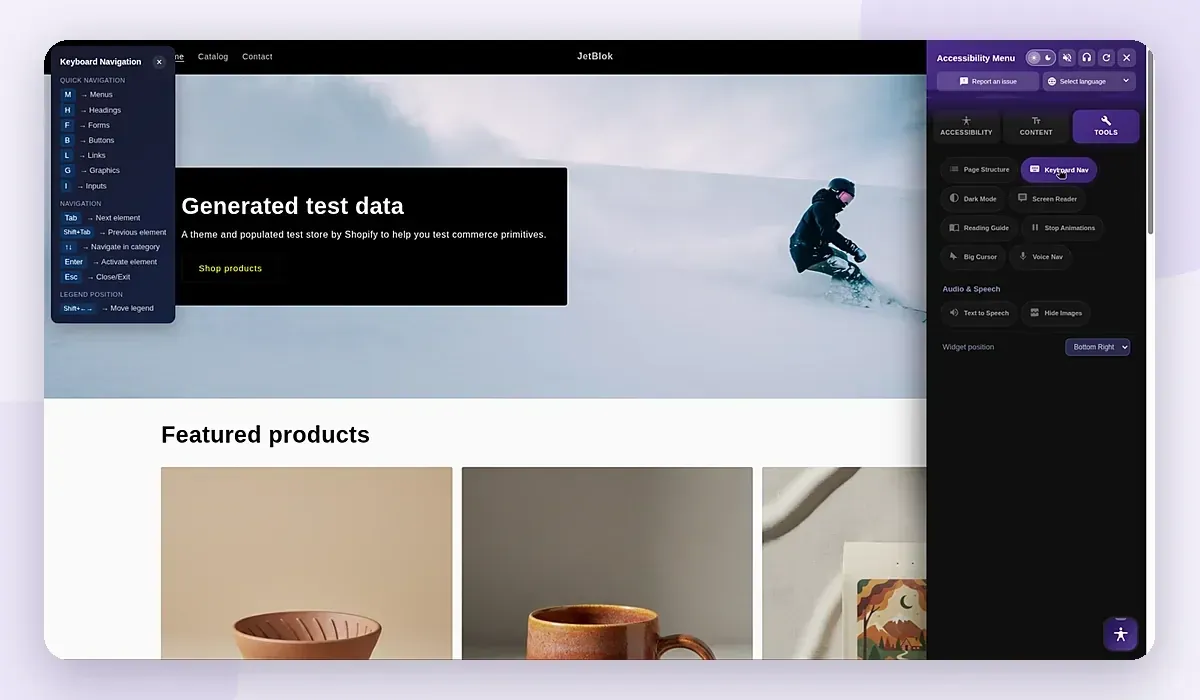
How AccessiWidget helps you work toward it
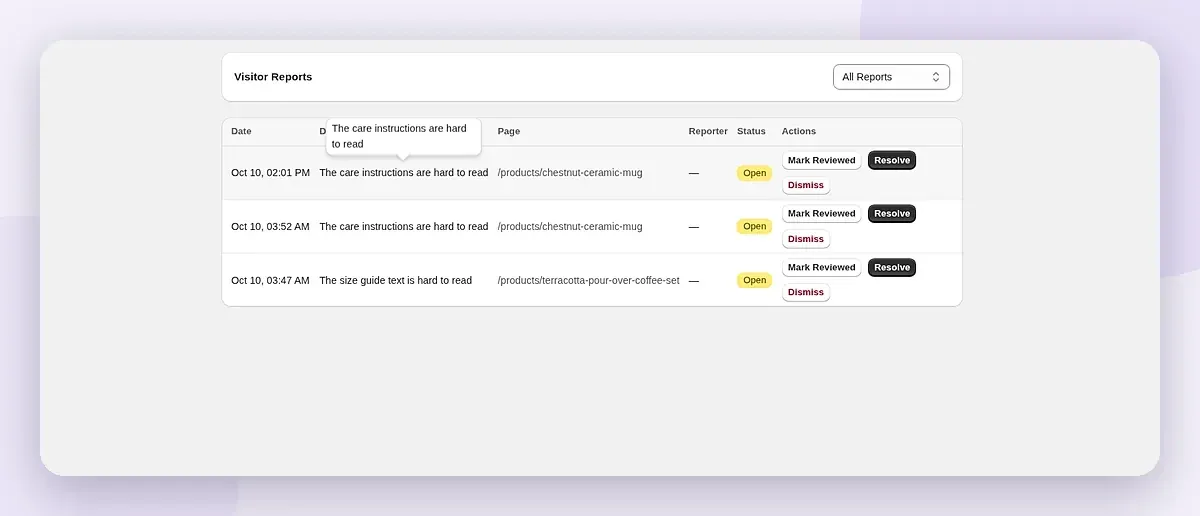
AccessiWidget can help shoppers enlarge text, raise contrast, pause motion, hear text read aloud, or use keyboard helpers. The store scan can find common issues, and the reports inbox gives shoppers a way to tell you when something gets in the way. That helps you reduce accessibility barriers and work toward WCAG 2.2. It does not make a store meet the Equality Act, and it does not protect you from a claim.
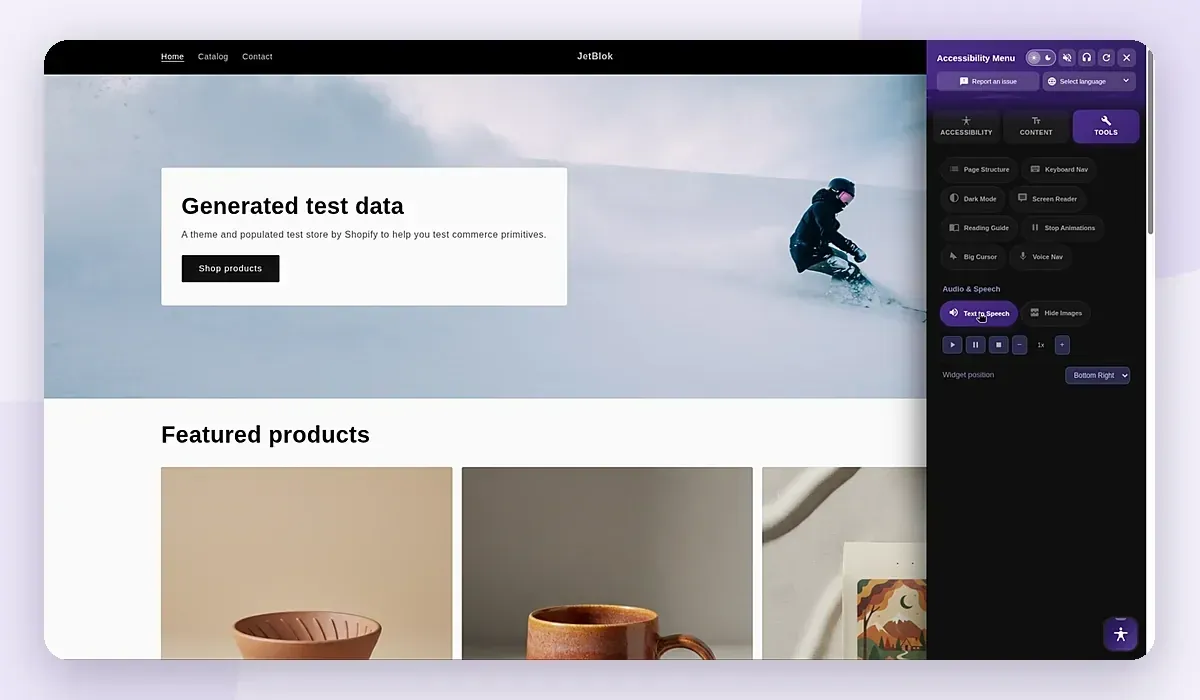
A practical checklist
Treat the duty as anticipatory, then work through the same steps as the AccessiWidget setup guide.
- Walk your own checkout with a keyboard, then with the text zoomed. Try a product page, a collection, the cart and payment.
- Install AccessiWidget and turn the widget on in your theme, then pick your colours and position.
- Add useful alt text to product images in the Shopify admin, then run a store scan and fix the issues it lists.
- Check contrast on buttons, prices and sale badges, and give form fields visible labels where you control them.
- Publish an honest accessibility statement, with a way for customers to ask for help or request information in another format, and keep it up to date.
- Check shopper reports, follow them up, and re-check after theme changes, app installs and campaign pages.
Read the full guide on JetBlok
This is general information, not legal advice. For advice about your business, speak to a lawyer who knows equality law in the part of the UK you operate in.
Questions merchants ask
When should I start making adjustments?
The Equality and Human Rights Commission says the duty is anticipatory. You should think about disabled customers in advance, not wait for a complaint. Walking your own checkout with a keyboard, and keeping a way for shoppers to report issues, are practical ways to do that.
Do private UK retailers have to publish an accessibility statement?
UK public sector sites are told to meet WCAG 2.2 Level AA and to publish a statement. Those regulations do not, by themselves, put the same statutory duty on a private Shopify store. An honest statement is still a useful practice, with a way for customers to ask for help or request information in another format.
Does AccessiWidget replace testing my own checkout?
No. The widget can help shoppers change how the store looks and reads, and the scan can find common issues. You should still walk the path to payment yourself with a keyboard and with the text zoomed. Theme markup and a usable checkout still matter.
Related guides: European Union , Australia .